Buttery Herb Stuffing is the crowning jewel of any holiday table, combining the rustic tang of toasted sourdough with the classic comfort of golden-brown white bread. This recipe focuses on creating a high-contrast texture where the edges are perfectly crisp and charred while the center remains moist and rich with melted butter. By using a blend of fresh flat-leaf parsley and dried sage, we achieve a flavor profile that is both nostalgic and sophisticated.
If you are looking for the perfect companion to your holiday roast or a hearty Sunday dinner, this Buttery Herb Stuffing delivers a glistening buttery sheen that looks just as good as it tastes. The combination of translucent sauteed celery and finely diced onions ensures every bite is packed with aromatic depth. This is the recipe that will have your guests asking for seconds before the main course is even carved.
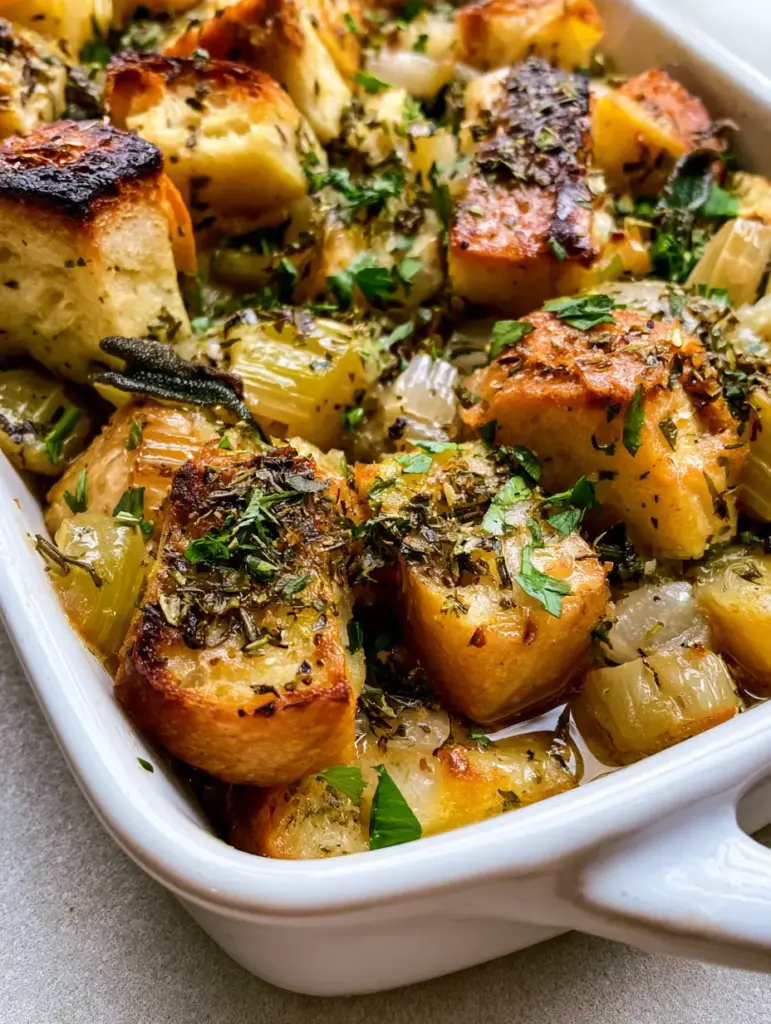
Why You Will Love This Crispy Sourdough Stuffing
- The Dual-Bread Texture: We use a mix of sourdough for structure and white bread for that classic, melt-in-your-mouth tenderness.
- Visual Glistening Finish: A final drizzle of melted butter before the last blast of heat creates a stunning, photo-ready sheen.
- Fragrant Herb Profile: The specific ratio of fresh thyme sprigs, dried sage flakes, and flat-leaf parsley creates an irresistible aroma.
- Golden Charred Edges: High-heat finishing ensures the bread tips are crisp, providing a necessary crunch to every forkful.
This side dish is so versatile it pairs beautifully with everything from a traditional turkey to baked chicken ricotta meatballs.
The Science of Selecting Your Stuffing Bread
Not all bread is created equal when it comes to Buttery Herb Stuffing. The foundation of this dish relies on the structural integrity of the bread cubes. If the bread is too soft, the stuffing turns into a soggy mush. If it is too hard, it never absorbs the savory broth.
We recommend using a loaf of homemade sourdough bread that has been allowed to sit out for at least 24 hours. The natural acidity of the sourdough provides a beautiful counterpoint to the heavy fats in the butter. When mixed with standard white bread, you get a variety of textures that keep the palate engaged.
Toasting your cubes is a non-negotiable step. By drying the bread in the oven before mixing, you create “micro-pockets” that act like sponges for the herb-infused butter and stock. This ensures the stuffing stays fluffy rather than dense.
Essential Ingredients for the Best Buttery Herb Stuffing
The Bread Base: You will need 6 cups (approx. 300g) of sourdough cubes and 4 cups (approx. 200g) of white bread chunks. Aim for irregular, hand-torn pieces for the most visual appeal.
The Fat: Use 1 cup (225g) of high-quality unsalted butter. We will use 3/4 cup for sauteing and the remaining 1/4 cup for the final “glistening” glaze mentioned in our visual blueprint.
Aromatics: 2 cups (200g) of finely diced yellow onions and 1.5 cups (150g) of sliced celery. These must be sauteed until translucent to release their natural sugars.
The Herb Trio: 1/4 cup (10g) of fresh chopped flat-leaf parsley, 1 tablespoon of dried sage flakes, and 4-5 sprigs of fresh thyme. The sage provides the “earthy” base, while the parsley adds brightness.
Liquid Gold: 2 to 3 cups (480ml – 720ml) of high-quality chicken or vegetable stock. Pour slowly to reach your desired moisture level.
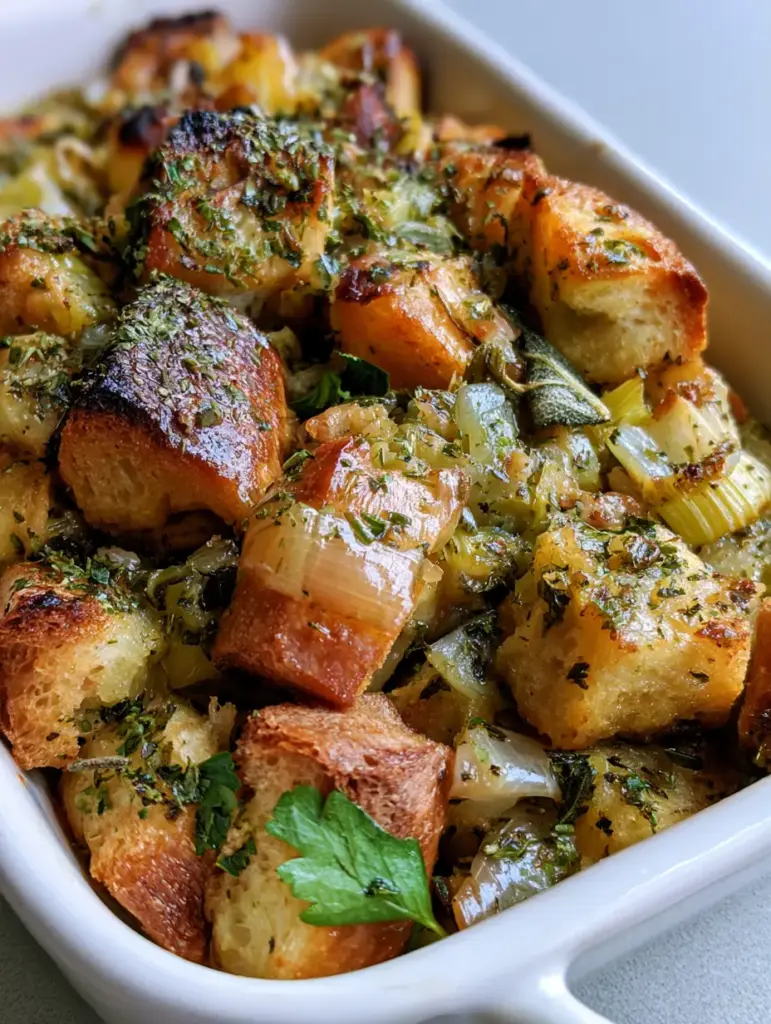
Step-by-Step Instructions for Pinterest-Perfect Stuffing
1. Prepare and Toast the Bread Foundation
Preheat your oven to 350°F (175°C). Spread your sourdough and white bread cubes in a single layer on two large baking sheets. Bake for 15-20 minutes, tossing occasionally, until they feel dry to the touch and show the faintest hint of golden brown. This step prevents the Buttery Herb Stuffing from becoming gummy.
2. Saute the Aromatics to Perfection
In a large skillet over medium heat, melt 3/4 cup (170g) of butter. Add your diced onions and sliced celery. Saute for 8-10 minutes. Visual Cue: The onions should be translucent and the celery softened, but not browned. The smell of garlic butter flavors often pairs well here, though we are sticking to the pure herb profile for this version.
3. The Herb and Broth Infusion
Stir the dried sage flakes and half of the fresh parsley into the butter mixture. Allow the herbs to “bloom” in the fat for 60 seconds. This wakes up the oils in the dried sage. Gradually whisk in 2 cups (480ml) of stock, seasoning generously with sea salt and cracked black pepper.
If you love comfort food, this savory base is similar to the richness found in Beer Cheese Soup, providing a deep, umami-packed foundation for the bread to soak up.
4. Combine and Hydrate
Place the toasted bread cubes into a massive mixing bowl. Pour the warm butter and broth mixture over the top. Use a large spatula to fold gently, ensuring every cube is coated without breaking the bread down into a paste. If the bread still feels very dry, add the remaining cup of stock 1/4 cup at a time.
5. The Final Bake and Glaze
Transfer the mixture into a white ceramic rectangular baking dish. Drizzle the remaining 1/4 cup (55g) of melted butter over the top. Top with the remaining fresh parsley and the sprigs of fresh thyme. Cover with foil and bake for 20 minutes. Remove the foil and bake for another 15-20 minutes.
Visual Cue: Look for the bread tips to develop a slight char and a glistening sheen. The surface should look crisp and toasted while the interior remains tender.
Expert Tips for Success
- Don’t Overmix: To maintain the “irregular cubes” look from our visual blueprint, fold the liquid into the bread gently. Over-mixing leads to a bread-pudding texture.
- Temperature Matters: Ensure your stock is warm when adding it to the bread; cold stock won’t penetrate the toasted cubes as effectively.
- Fresh vs. Dried: Always use fresh parsley and thyme for the garnish. The dried sage is better for the “base” flavor as it stands up well to the long bake time.
- The “Squeeze” Test: Before baking, grab a cube of stuffing. It should feel like a damp sponge. If it drips, it’s too wet; if it feels crunchy in the middle, add more broth.
For more easy dinner inspiration that uses simple ingredients, check out our slow cooker comfort meals.
Storage, Reheating, and Freezing
To Store: Keep leftover Buttery Herb Stuffing in an airtight container in the refrigerator for up to 4 days.
To Reheat: The best way to regain that crispy texture is in the oven. Place stuffing in a dish, cover with foil, and bake at 350°F (175°C) for 15 minutes. Remove the foil for the last 5 minutes to re-crisp the edges.
To Freeze: You can freeze unbaked stuffing for up to 3 months. Thaw completely in the fridge before proceeding with the baking instructions. Baked stuffing can also be frozen, though the texture of the sourdough may soften slightly.
What to Serve With This Stuffing
This Buttery Herb Stuffing is the ultimate side dish for a Thanksgiving turkey or a Sunday roast chicken. However, it also works beautifully as a side for simpler weeknight proteins. Try it alongside a juicy steak or even a creamy pasta dish like our garlic butter pasta for a high-carb comfort feast.
Frequently Asked Questions
Yes! You can prepare the mixture and place it in the baking dish a day in advance. Store it covered in the fridge and add an extra 10 minutes to the covered baking time.
You can, but for the best flavor and the ‘Visual Blueprint’ look, we recommend hand-tearing fresh sourdough and white bread loaves and toasting them yourself.
The secret is the final butter drizzle and baking uncovered for the last 20 minutes at 350°F (175°C) to allow the Maillard reaction to char the tips.
A mix of sourdough and a sturdy white loaf (like Italian or Pullman) is best. The sourdough provides structure and tang, while the white bread adds a soft, classic texture.
Soggy stuffing usually comes from not toasting the bread cubes long enough or adding too much broth too quickly. Always toast until the bread is dry and add liquid gradually.
The Official Buttery Herb Stuffing Recipe
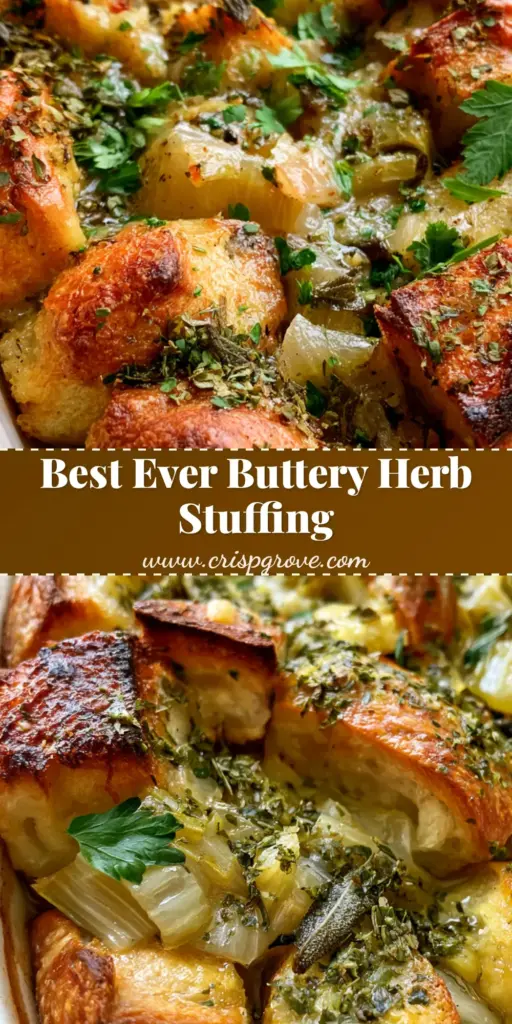
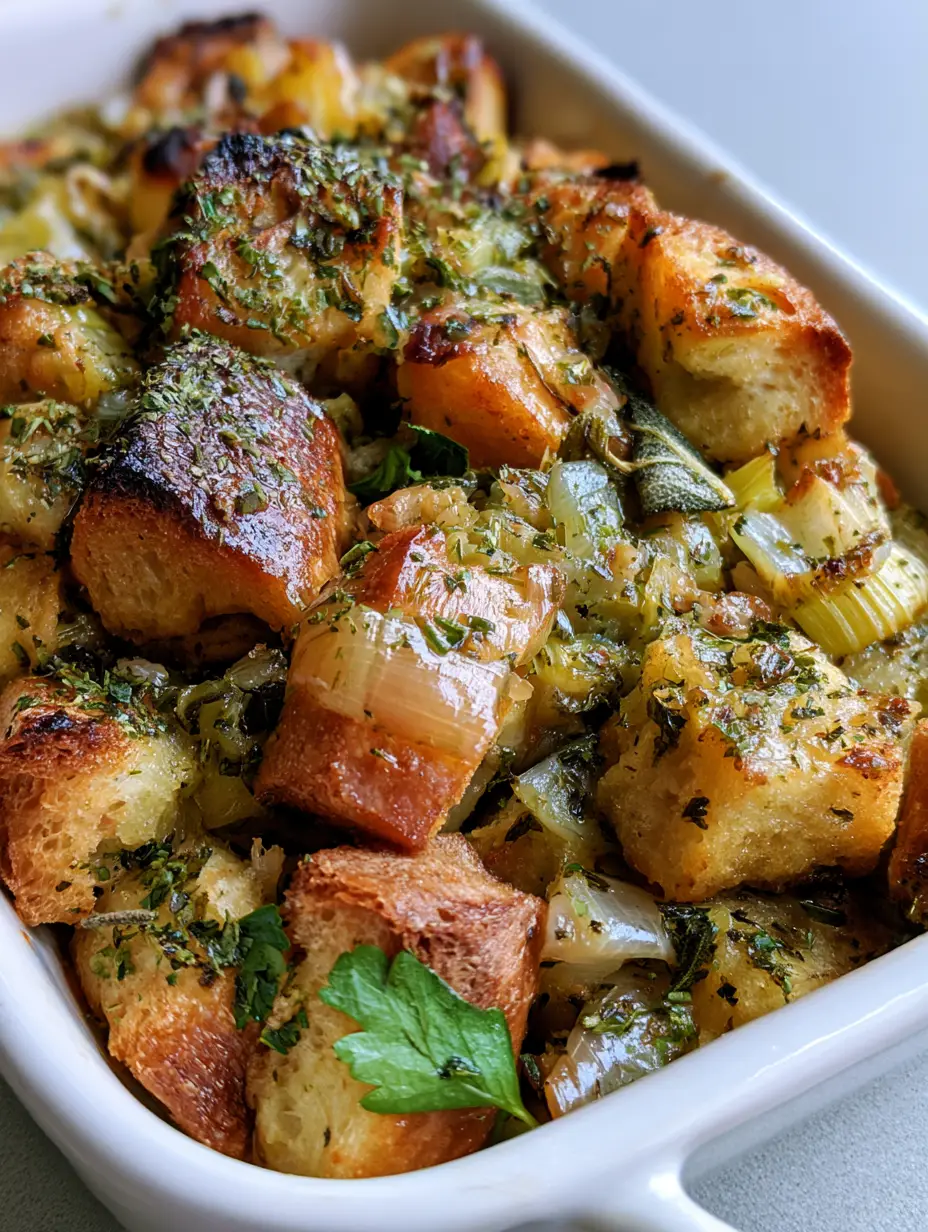
Buttery Herb Stuffing: The Ultimate Golden Sourdough Side Dish
Ingredients
Equipment
Method
- Preheat oven to 350°F. Arrange sourdough and white bread cubes on baking sheets and bake for 15-20 minutes until dry.
- Melt 3/4 cup butter in a skillet. Add onions and celery, sauteing until translucent and soft.
- Stir in dried sage and half the parsley. Add 2 cups of stock and season with salt and pepper.
- Fold the butter mixture into the bread cubes gently. Add more stock if needed until bread is hydrated but not soggy.
- Transfer to a white ceramic dish. Drizzle with 1/4 cup melted butter and top with thyme sprigs. Cover and bake for 20 mins, then uncover and bake for 20 more until charred and glistening.
Notes
Don't skip the final butter drizzle for the professional sheen.
Share Your Culinary Creations!
We want to see your Buttery Herb Stuffing! Did you get those perfectly charred sourdough edges? Save this recipe to your “Holiday Sides” board on Pinterest and follow @crisp_grove for more rustic, delicious recipes. If you made this, please leave a 5-star rating in the recipe card above and drop a photo of your dish in the comments below. Happy cooking!